Antalya’s cultural routes stretch from Roman-era cities to contemporary exhibitions. You can trace urban life in Perge, explore the buildings around Side Harbour and spend time in the historic streets of Kaleiçi. Getting to know the distinctive architecture of the ancient cities, the city’s exhibition programme and the stops connected to the area where you are staying is the first step towards planning a trip that suits your interests.
Antalya’s Magnificent Ancient Cities: Perge, Aspendos and Side
A good way to understand Perge in Aksu is to look at the urban layout formed by its two intersecting main streets. The colonnaded street with a water channel running down its centre, the agora, Roman baths and monumental fountain offer clues to how everyday life was organised in the ancient city.
In Aspendos, you can turn your attention to the architecture of the theatre. Built by the architect Zeno during the reign of Emperor Marcus Aurelius, this well-preserved structure is one of the city’s most prominent remains. Aspendos’s history is not limited to the performing arts; in antiquity, the city was also known for trade and horse breeding.
Side’s identity is shaped by its harbour and trading history. The colonnaded street leading to the temples at the harbour entrance makes the connection between the city and the sea visible. If you would like to compare the three sites as you explore, you can focus on the urban layout in Perge, theatre architecture in Aspendos and the settlement that developed around the harbour in Side.
Sunset at the Temple of Apollo and Side’s Ancient Theatre
The reason to set aside time for sunset at the Temple of Apollo in Side is the view that brings the columns and the sea together. The sight of the sun disappearing behind the columns is one of this place’s distinctive features. Built alongside the neighbouring Temple of Athena during the Pax Romana for the city’s principal god and goddess, the structure also reflects the religious importance of the harbour entrance.
Side’s Ancient Theatre represents a different architectural combination: its layout follows the Hellenistic tradition, while its construction technique reflects the Roman approach. The three-storey stage building and the system of vaults supporting the upper seating tiers are important details of the structure.
The World-Famous Antalya Museum: A Journey into the Depths of History
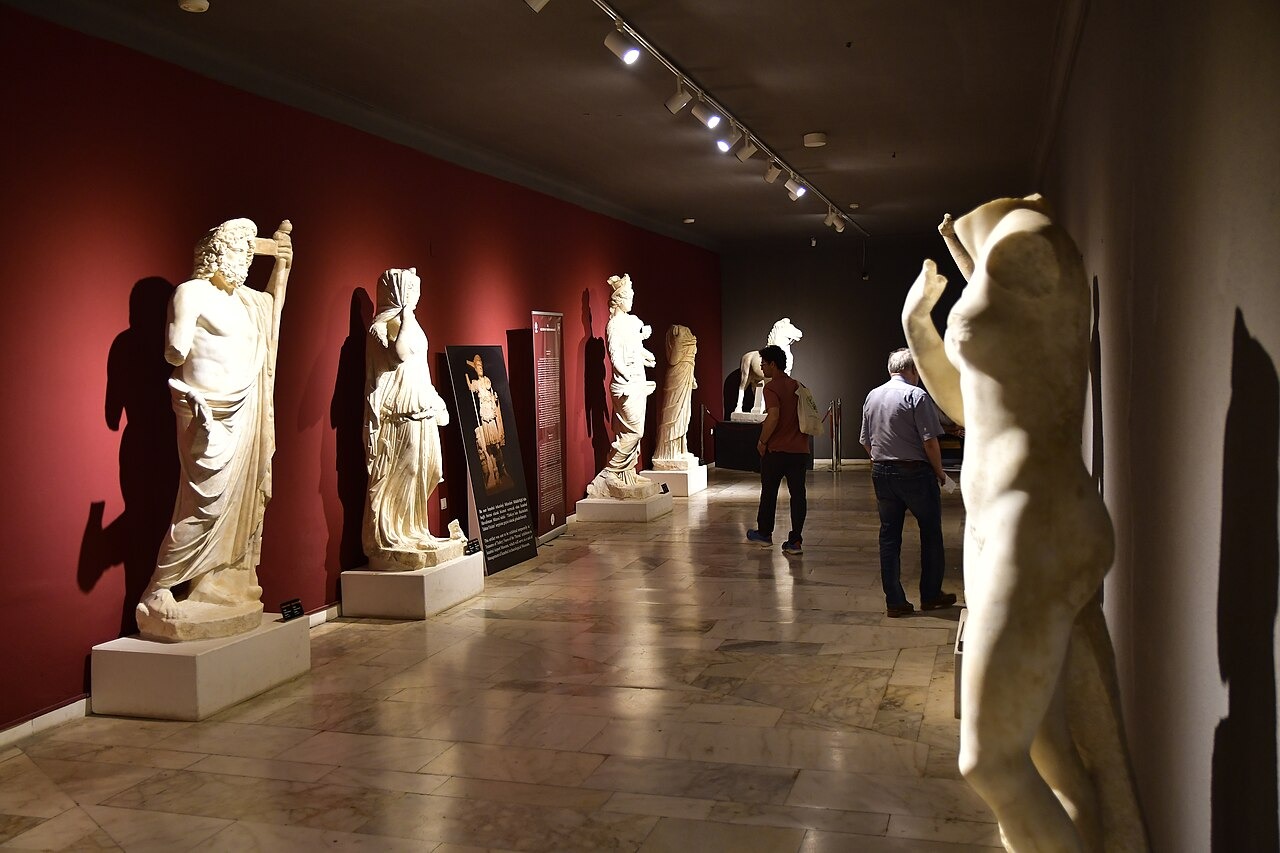
Antalya is also a city whose past you may wish to discover through its museums. However, Antalya Museum, which you might be considering for your itinerary among the museums in Antalya, is closed to visitors until work on the new museum building and the relocation of artefacts is complete. You therefore need to plan your archaeological museum visit around the institution’s reopening announcement.
If you are considering a Müzekart museum pass, you can first draw up a list of the open museums and archaeological sites you would like to visit. Before proceeding with an online museum pass application, review the purchase and usage conditions alongside the current admission information for your chosen stops.
Kaleiçi (Old Town): Historic Streets from the Ottoman Era to Roman Times
In Kaleiçi, history is not concentrated around a single monument. The narrow streets of the walled old town, descending towards the harbour, are lined with traditional two- or three-storey houses. Paying attention to the houses’ street-facing and garden-facing façades as you walk reveals that this historic settlement is made up not only of monumental buildings but also of residential architecture.
Hadrian’s Gate is a prominent stop from the Roman period. Built in AD 130 in honour of Emperor Hadrian, it is also known as the Three Gates because of its three openings. After taking time to look at its carved and relief decorations, you can continue your walk towards the harbour. The ancient harbour is now used as a marina; the conversion of some historic houses into accommodation and places to eat and drink shows how the old town’s fabric relates to present-day life.
AKS (Antalya Culture and Arts) and Current Exhibitions in the City
For those wishing to move from archaeological structures to an arts programme, Antalya Culture and Arts offers a different kind of stop with its temporary exhibitions. AKS’s exhibition archive covers painting, photography and sculpture; past programmes have featured names such as Andy Warhol, Yıldız Moran and İlhan Koman. If you enjoy visiting art galleries or modern art museums, you can also explore AKS’s exhibition programme according to your interests.
The dates announced by AKS for the A Different Antalya Collection Exhibition are between 5 September–18 October 2026. If your visit falls within this period, you can include the exhibition in your city itinerary. For a trip at another time, consult the exhibition calendar for that period.
Historical Routes Accessible from Melas Hotels in Side and Lara
Melas Resort Hotel in Side is a convenient starting point for a history-focused holiday thanks to its location close to the ancient city of Side. While staying at this beachfront hotel with a private beach, you can devote part of your holiday to exploring the ancient city. Planning your Side visit to include sunset brings a seaside holiday and your interest in history together in one itinerary.
Melas Lara Hotel in the Lara-Kundu area also has a beachfront location and is 15 km from Antalya city centre. For a day focused on the city, you can combine a walk through Kaleiçi with an AKS programme that matches your travel dates. Spending part of the day in historic streets and the rest at an exhibition creates a balanced itinerary combining architecture and art.